 how-to
How to Fix Carpet Ripples Without Making Them Worse
Last Updated: October 30, 2026
Quick Summary
Most carpet ripples need the carpet stretched back onto its tack strips, not flattened with heat or steam. A power stretcher restores tension across the room, while a knee kicker only positions and finishes edges. Skip DIY if the backing crumbles, a seam is lifting, or the underlay is wet.
- Ripples typically start small, then spread, so fix the tension early.
- Carpet buckling comes down to one thing: the carpet has more length than the floor needs.
- A power stretcher does the main tensioning work; a knee kicker finishes edges.
- Replace tack strips with broken, bent, or missing pins before stretching.
- Never stretch across an unprotected seam, or the join will split.
Table of Contents
- Carpet Ripples: What You're Looking At and Why It Matters
- Carpet Buckling Causes: Why Ripples Appear in the First Place
- Assessing Your Carpet Before You Touch It
- How to Use a Carpet Power Stretcher (and Why a Knee Kicker Alone Often Fails)
- Carpet Restretching Cost: What Affects the Quote
- Book a Restretching Assessment with Darren Adams Carpets
- Frequently Asked Questions
Carpet Ripples: What You're Looking At and Why It Matters
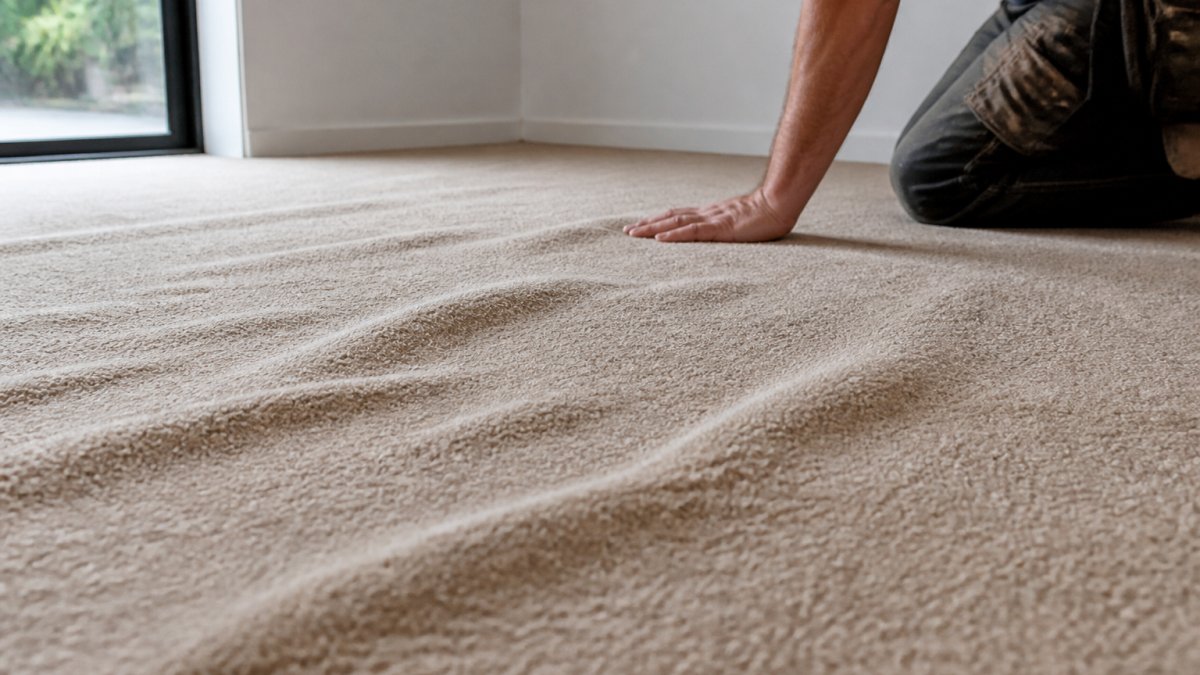
Carpet ripples are raised ridges or waves that lift off the floor when the carpet loses tension across the room. Left alone, they turn a flat floor into a trip hazard and wear the backing out faster. If you're wondering how to fix carpet ripples, the short answer is that most cases need the carpet stretched back onto its tack strips, not flattened with heat or steam. At Darren Adams Carpets, we handle this repair across Melbourne's outer eastern suburbs, and ripples typically start small, then spread.
The Safety Issue Hiding in a Loose Carpet
A loose carpet is a fall waiting to happen. The raised ridges catch toes and chair legs, and older visitors are most at risk. The wrinkle also flexes the backing every time someone walks on it, which breaks down the latex holding the tufts. Fix the tension early and you protect both the people in the room and the carpet itself.
Carpet Buckling Causes: Why Ripples Appear in the First Place
Carpet buckling causes come down to one thing: the carpet has more length than the floor needs. Here's what creates that slack:
- Poor installation. The layer stretched by hand instead of using a power stretcher.
- Humidity and moisture. Damp air relaxes the backing, and the carpet grows.
- Water damage. A slow leak or spill swells the backing and padding.
- Temperature changes. Warm rooms soften the backing and let it relax.
- Heavy traffic and furniture movement. Constant dragging pulls the carpet off its anchors.
- Carpet age. Backing loses grip over time and stops holding tension.
If your ripples come from burns, tears or stains rather than slack, you're looking at a different job. For that kind of damage, see our carpet repairs in Lilydale.
Assessing Your Carpet Before You Touch It
Before you hire a stretcher or lift a single edge, spend ten minutes working out what you're actually dealing with. Most failed DIY ripple repairs come down to stretching a carpet that was never going to hold tension. Use this sequence.
1. Map the ripples. Walk the room in bare feet or socks and note where the ridges run.
2. Test the edges. Press down along the skirting board every metre or so.
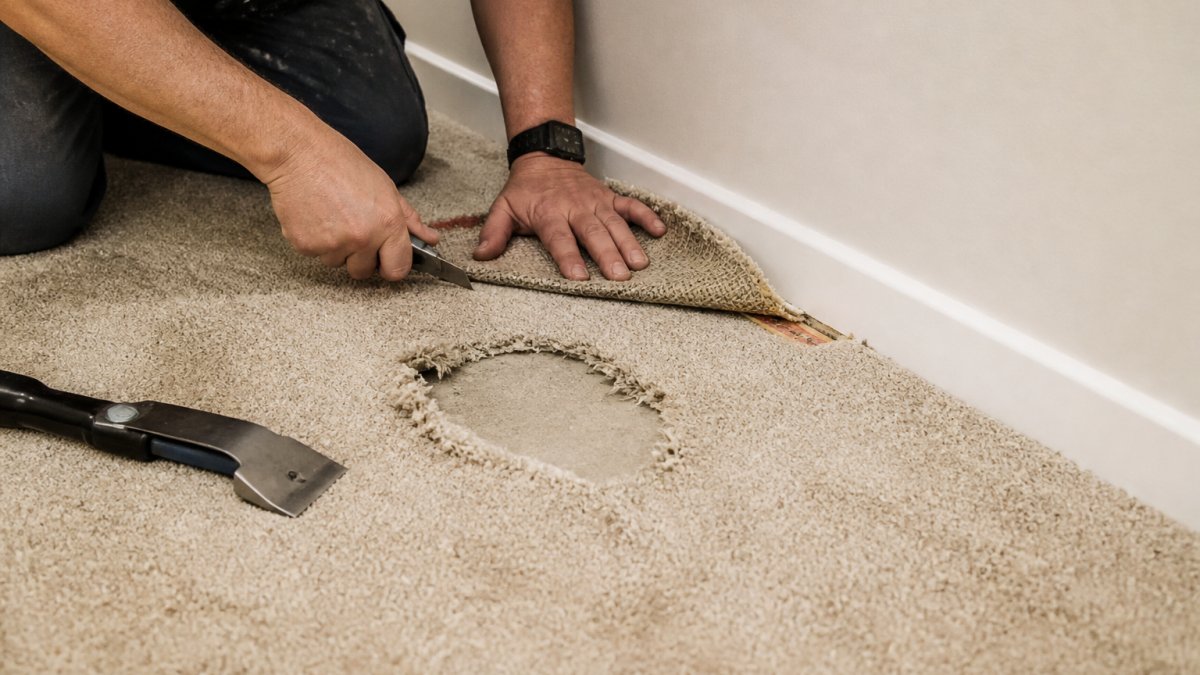
3. Check the backing. Peel back a corner at a doorway or a floor vent and look at the underside.
4. Check the underlay. Lift the carpet slightly and press the underlay. It should spring back.
5. Check the seams. Run a hand along any visible seam.
6. Check for moisture. Press a dry paper towel against the slab or underlay in the worst-affected area.
When a DIY Repair May Be Appropriate
A small ripple in one room, caught early, with sound backing, intact seams, and dry underlay, is worth a careful attempt with a knee kicker and a borrowed or hired power stretcher. Skip the DIY route if any of the following apply:
- The backing crumbles or flakes when you flex it.
- The ripple runs across a seam or the seam is already lifting.
- The underlay is compressed, torn, or has been wet.
- The carpet is more than roughly 15 years old and the backing feels stiff.
- The ripple covers most of the room rather than one edge.
- The carpet is a natural fibre or a delicate loop pile that tears easily.
In those cases, a professional assessment is cheaper than a failed repair. If you're weighing up repair, restretching or replacement, our guide on how to decide whether your carpet needs repair, restretching or complete replacement walks through that exact call.
Before you hire a stretcher, run through these checks to see whether the ripple is worth a DIY attempt.
| Check | What to do | What it tells you |
|---|---|---|
| Map the ripples | Walk the room in bare feet and note ridge direction | Parallel to wall means edge released; fanning means localised slack |
| Test the edges | Press along skirting every metre | Lifts easily means edge released; tight edge means field tension |
| Check the backing | Peel back a corner at doorway or vent | Crumbling, flaking or sticky latex means degraded backing |
| Check the underlay | Lift carpet slightly and press | Stays compressed, torn or wet means replace it |
| Check the seams | Run a hand along visible seams | Lifting edges mean seam tape has failed |
| Check for moisture | Press a dry paper towel against slab or underlay | Dampness, musty smell or cold patch points to moisture |
How to Use a Carpet Power Stretcher (and Why a Knee Kicker Alone Often Fails)
A power stretcher is a long pole with a toothed head and a padded tail that braces against the opposite wall.
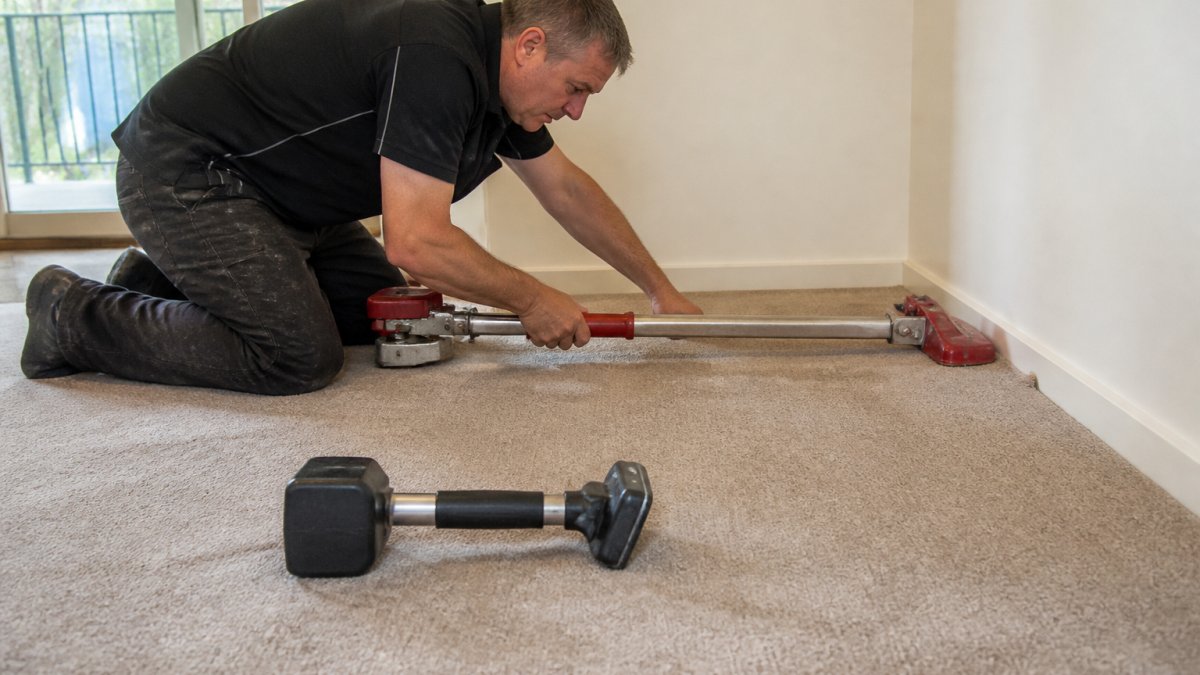
- Clear the room completely and pull the carpet off the skirting on the side you're working from. Vacuum first, grit under the stretcher head dulls the teeth and scratches the backing.
- Inspect the tack strips along every wall. Replace any with broken, bent, or missing pins, and re-nail loose strips. A stretcher pulling against failing tack strips will simply pull them out.
- Seat the stretcher tail against the far wall, using a padded block or offcut to protect paint and plaster. On a wall you can't brace against, use a door frame with a protective block or a stretcher with a wall-brace accessory.
- Set the head teeth into the carpet a short distance in from the loose edge, angled slightly downward so the teeth grip the backing rather than the pile.
- Work the lever in short strokes, moving along the wall in overlapping passes. Pull in the direction of the ripple, not against it. Watch the carpet surface, it should flatten progressively, not jump.
- Re-hook the carpet onto the tack strip with the stair tool, working from the centre of the wall outward so the tension stays even. Trim excess with a fresh blade held at a shallow angle against the strip.
- Repeat on each affected side, then re-check the field. If a ripple remains in the middle, the room needs a second pass or a seam repair rather than more force.
Judging correct tension. The carpet should feel firm underfoot with no soft ridges, and a straight edge laid across the room should sit flat.
Seams. Never stretch across an unprotected seam. Fit a seam guard or seam tape and roll the seam before applying full tension, or the join will split.
Safety. Tack strips are sharp, wear knee pads and gloves, and keep bare feet and children out of the room.
Watch out: over-stretching tears the backing or pulls a seam apart, and a missing seam guard will split the join. Our carpet restretching service covers the cases where DIY isn't worth the risk.
Carpet Restretching Cost: What Affects the Quote
Carpet restretching cost depends on room size, how much furniture needs moving, the condition of the tack strips, and whether the underlay needs replacing. A single small room sits at the low end. Multiple rooms, stairs, or failing underlay push it up. We don't publish flat rates because every job differs, so ask for a quote based on your rooms. If the underlay is compressed or torn, carpet underlay installation in Lilydale is usually worth doing at the same time, since you're already lifting the carpet.
Book a Restretching Assessment with Darren Adams Carpets
Ripples don't fix themselves, and every month you wait makes the backing worse. Darren Adams Carpets is fully licensed and insured, and you deal directly with Darren on every job. Request a free quote through our contact page to arrange your assessment.
Frequently Asked Questions
Is it expensive to restretch carpet?
It depends on the number of rooms, how loose the carpet is, whether furniture needs moving and the state of the tack strips. A single small room is a much smaller job than a whole house with failed anchoring. Because the cause matters as much as the fix, a quote is best based on an inspection of the room rather than a flat per-room figure. You can request a free quote from Darren Adams Carpets.
Can I restretch carpet myself?
You can handle very small, mild ripples in a low-traffic spot if you have the right tools and understand the risks. Power stretchers are the tool that actually restores tension across a room, and they are expensive to buy and easy to misuse. Knee kickers alone tend to pull carpet off the tack strips at the far edge. If the ripple runs across a doorway, a seam, or more than a metre, professional restretching is the safer call.
What causes wavy carpet?
The usual carpet buckling causes are poor installation with too little tension, humidity and moisture from cleaning or spills, temperature swings, heavy furniture dragged across the surface, and simple carpet age as the backing loses grip on the tack strips. Ripples that appear right after a clean often settle once the carpet is completely dry, so give it time before assuming the worst.
Will restretching my carpet prevent future ripples?
Correct tension and sound tack strips remove the main reason ripples form, and a proper power stretch resets the carpet across the whole room rather than just the visible wrinkle. It will not fix an underlying moisture problem or a failing backing. Deal with leaks, drying and heavy furniture movement first,
A ripple caught early is a quick fix. A ripple left for a year is often a replacement. Get started with Darren Adams Carpets and get your carpet stretched properly, so it stays flat and safe underfoot.