 how-to
Is Carpet Restretching Worth It? A Straight Answer
Last Updated: November 2, 2026
Quick Summary
Carpet restretching is worth it when the carpet itself is still sound, since it pulls a loose, wrinkled carpet tight and re-secures it to the tack strip. If the backing has delaminated or the pile is worn through, replacement is the better spend.
- Restretching fixes looseness but will not fix stains, burns, worn patches or a perished backing.
- Empty rooms are cheapest, so clearing the floor yourself is the easiest way to reduce the quote.
- Carpet should be stretched about 1% to 1½% in each direction, per room.
- A knee kicker alone cannot hold that tension, so a power stretcher is used.
- Delamination is the single most common reason a stretch fails.
Table of Contents
- Signs Carpet Needs Stretching and What Restretching Can Fix
- Carpet Restretching Cost and What Drives the Price
- How Long Does Carpet Stretching Take and What the Visit Involves
- Carpet Stretching vs Replacement: Which One Fits Your Situation
- Frequently Asked Questions
Signs Carpet Needs Stretching and What Restretching Can Fix
Is carpet restretching worth it? For many homes, yes, when the carpet itself is still sound. Carpet restretching pulls a loose, wrinkled carpet tight and re-secures it to the tack strip. Darren Adams Carpets offers carpet restretching across Lilydale and surrounding areas.
Here is what to look for:
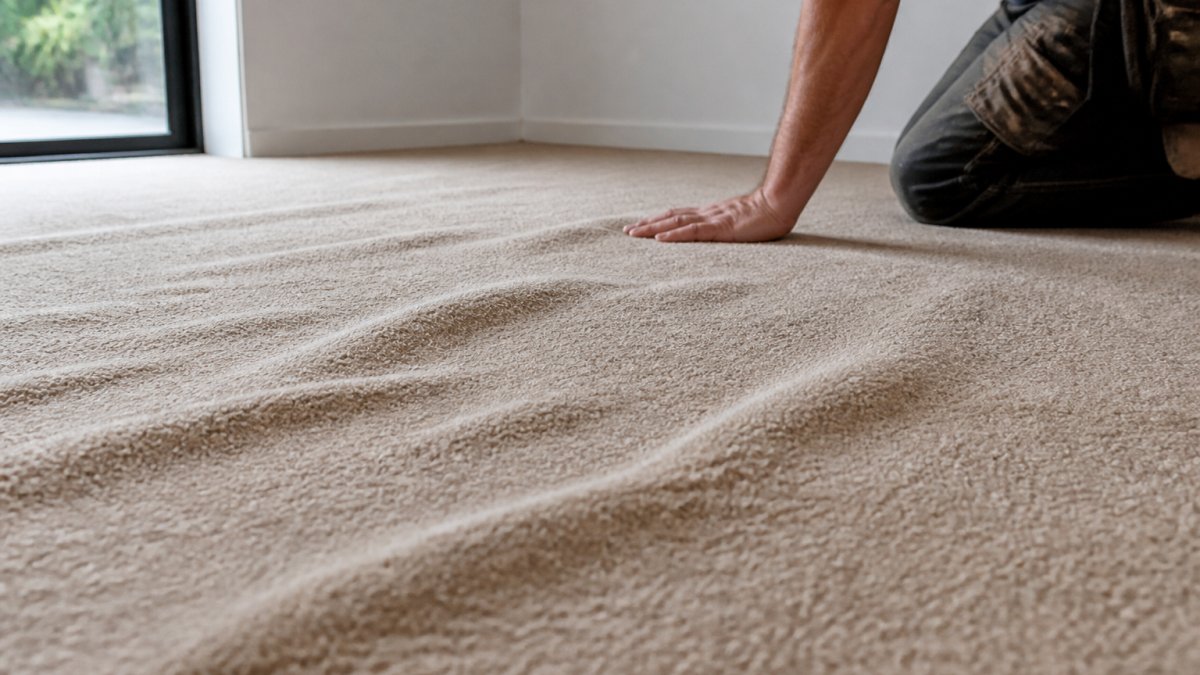
- Ripples or waves that show under side light
- Loose patches near doorways and walkways
- Buckling that catches a vacuum cleaner
- Wrinkles that shift when you walk over them
These are trip hazards and worsen with foot traffic. Leaving a buckle for months can turn a quick stretch into a replacement, because the backing may delaminate where it creases.
Restretching fixes looseness. It will not fix stains, burns, worn patches or a perished backing. If you want to see the service itself, look at carpet restretching, and for the ripple problem specifically, read how to fix carpet ripples before you touch anything.
Carpet Restretching Cost and What Drives the Price
Carpet restretching cost is the question most homeowners want answered, and the one most service pages dodge. You are paying for labour and setup, not carpet: the job is to re-tension the existing carpet and re-secure it to the tack strip.
Several factors affect the quote. Pricing depends on the specifics of each job, so for current prices or a quote, visit the Darren Adams Carpets website. The main factors include:
- Room size and layout. A simple rectangular bedroom is quick. An L-shaped lounge wrapped around a hallway takes longer because the stretcher must be reset at each change of direction.
- Furniture and access. Empty rooms are cheapest. Moving a wall unit, piano or full bedroom suite is billable time, so clearing the floor yourself is the easiest way to reduce the quote.
- How loose the carpet has become. A carpet just starting to ripple near a doorway needs less work than one buckling across a whole room for a year. The longer it has been loose, the more likely the backing has delaminated.
- Tack strip and underlay condition. Rusted, unpinned or pulled-away tack strip must be replaced before the carpet can be re-hooked, and worn underlay may also need attention. These are materials costs on top of labour.
Stairs are their own line item. A staircase cannot be stretched the same way a flat room can, and each flight is usually quoted separately because of the extra time and the safety considerations.
To prepare for a quote, note the number of rooms, whether stairs are involved, roughly how long the carpet has been loose, and whether you can clear the furniture yourself. For a firm figure, request a quote from Darren Adams Carpets, as condition is the variable that is hard to judge without seeing the floor.
How Long Does Carpet Stretching Take and What the Visit Involves
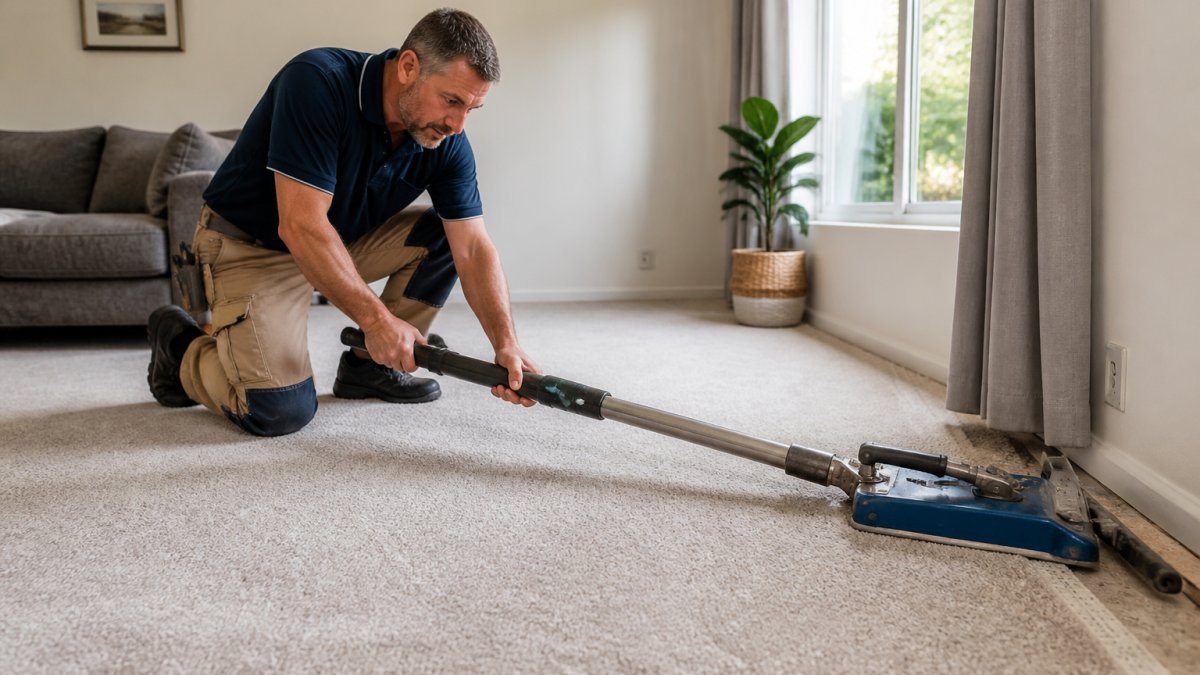
How long does carpet stretching take? Job duration varies with the size and condition of the floor, so Darren Adams Carpets can advise on timing when you request a quote. The visit generally follows this order:
- Move furniture clear of the work area
- Pull the carpet off the tack strip along the edges
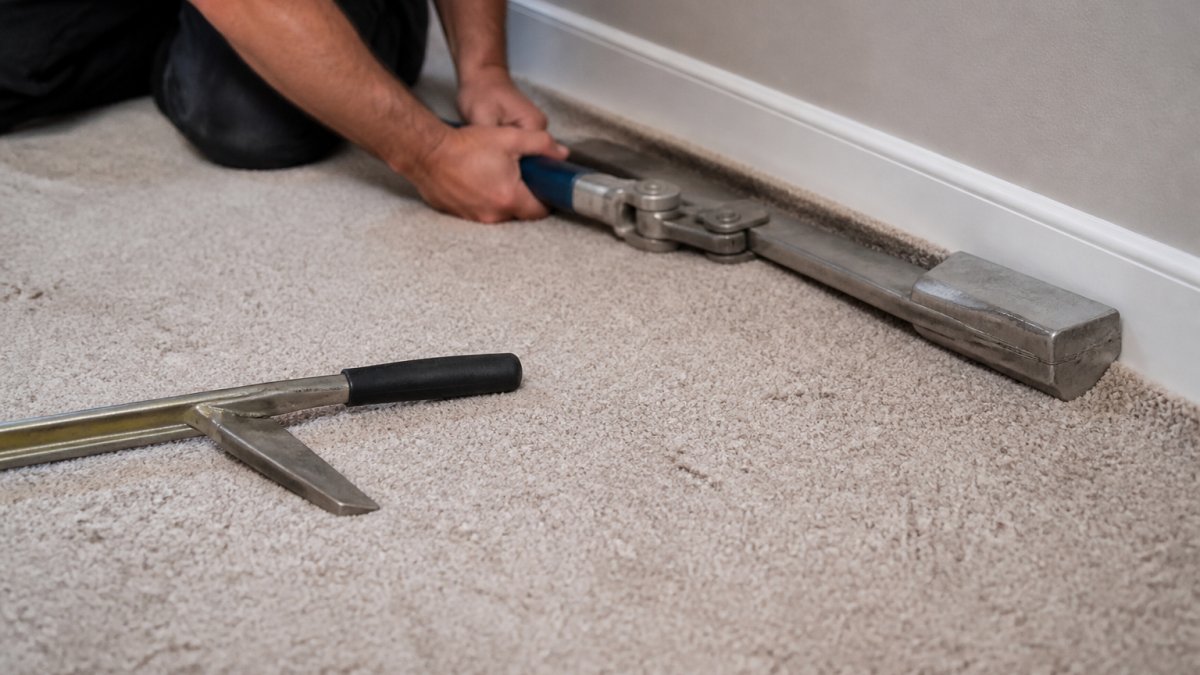
- Stretch it with a power stretcher, not just a knee kicker
- Re-hook the carpet onto the tack strip
- Trim excess carpet and refit the trim
- Vacuum and put the room back together
The Carpet and Rug Institute guidance on restretching sets the benchmark: carpet should be stretched about 1% to 1½% in each direction, per room. A knee kicker alone cannot hold that tension. That is the difference between a stretch that lasts and one that ripples again in a season. If you are ready to book, contact us and we will find a time.
Carpet Stretching vs Replacement: Which One Fits Your Situation
Carpet stretching vs replacement comes down to condition, not age. A carpet with sound backing is a better restretch candidate than one that has delaminated, regardless of age. The useful question is not "how old is it?" but "what has actually failed?"
Work through these checks in order. The first one that fails usually points to replacement.
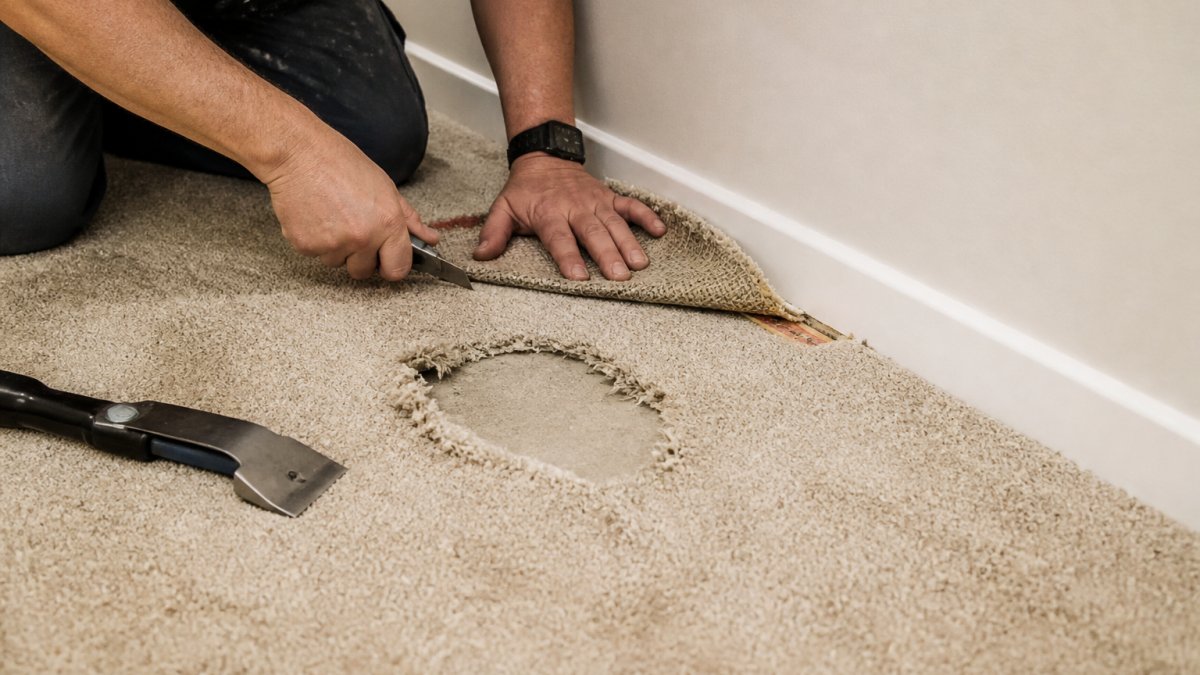
- Backing condition. Pick up a corner or lift the edge at a doorway. If the backing crumbles, separates from the pile or feels brittle, restretching will not hold. Delamination is the single most common reason a stretch fails.
- Underlay condition. Compressed, torn or disintegrating underlay will not support the carpet under tension. If the underlay has gone, replacement is usually the better spend.
- Pile wear. Look at the walkways and in front of the couch. If the pile is worn flat or the backing is showing through, stretching will re-tension a worn carpet but will not restore the pile.
- Staining and damage. Stains, burns, pet damage and water damage are not stretching problems. If the carpet is sound but stained, cleaning is the fix; if it is stained and worn, replacement is.
- Extent of looseness. A ripple in one room is a straightforward stretch. Widespread buckling across a whole house, especially where it has been left for a long time, raises the risk that the backing has already creased and failed.
- Repair cost versus replacement cost. If the restretch quote plus any tack strip and underlay work approaches the cost of new carpet, replacement may make more sense, particularly on a worn carpet. Request a quote from Darren Adams Carpets to compare the options.
| Situation | Best move | Why |
|---|---|---|
| Ripples, sound backing and underlay | Restretch | Lowest-cost fix, usually same day |
| Worn walkways, flat pile | Replace | Stretching will not restore pile |
| Water damage or delamination | Replace | Backing has failed |
| Loose carpet before a sale | Restretch | Fast, tidy result |
| Old wool carpet, intact backing | Restretch | Wool holds tension well |
| Rusted tack strip, otherwise sound carpet | Restretch plus strip replacement | Strip is a materials cost, not a reason to replace |
A quick rule of thumb: if the backing and underlay are sound and the pile is not worn through, restretching may be worth considering. If the backing has perished, no amount of tension will save it, and a stretch is money spent on a carpet that will ripple again.
Restretching is not right for every carpet. For more detail, see our guide on repair, restretching or replacement.
Frequently Asked Questions
Is carpet restretching worth the cost?
It depends on the carpet's condition. Restretching is usually worth it when the backing is intact, the pile still has life, and the cushion and tack strip can hold tension. In that case you may avoid replacement. If the carpet is worn through, water damaged or delaminating, stretching money is wasted. Get an inspection first, then compare the restretching cost against a replacement quote before deciding.
Can I restretch carpet myself?
You can hire a knee kicker, but a knee kicker alone will not pull a room tight. Proper stretching generally needs a power stretcher and correct tack strip. Getting it wrong can tear backing, open seams or leave new ripples within months. For a whole room, a professional service is the safer and usually cheaper option once tool hire and rework are counted.
When should carpet be replaced instead of restretched?
Replace rather than repair when the backing is crumbling, the pile is worn through in traffic lanes, there is water damage or persistent odour, or the carpet is at the end of its lifespan. Restretching only fixes loose carpet, wrinkles, ripples and buckling. It cannot restore worn fibres or fix a failing backing. If a quote for stretching comes close to the cost of new carpet, replacement gives better value.
Loose carpet is a safety issue and a money issue, and it rarely fixes itself. At Darren Adams Carpets, you deal directly with Darren on every job, backed by more than 24 years in the trade, full licensing and insurance, and a local team that turns up when we say we will. We restretch, repair and lay new carpet, so one call covers the lot. Get started with Darren Adams Carpets and get your carpet tight, safe and looking right again.