 blog
What Does Carpet Restretching Cost Per Room?
Last Updated: November 4, 2026
Quick Summary
Carpet restretching cost per room is not a fixed figure, because the price reflects the work needed to get your carpet tight again rather than a standard hourly rate. Published overseas guides put professional stretching at roughly US$100 to US$300 for a single room, but local pricing depends on room size, access, and how much furniture has to move.
- A small bedroom of 9-12 m² typically falls in the $150-$250 indicative price band.
- Ask for the measured area in square metres, not just a room count, to compare quotes fairly.
- A quote dramatically cheaper than others may exclude furniture moving, trimming or re-tacking.
- Restretching suits sound carpet with failed tension; replacement suits worn pile or degraded backing.
- A knee kicker can nudge a loose edge but cannot deliver the tension a full room needs.
Table of Contents
- Carpet Restretching Cost Per Room: What Drives the Price
- Signs Your Carpet Needs Restretching
- What a Restretching Quote Should Include
- Carpet Restretching vs Replacement: Which Makes Sense
- How Long Does Carpet Restretching Last?
- DIY Carpet Stretching Tools vs Hiring a Professional
- Frequently Asked Questions
Carpet Restretching Cost Per Room: What Drives the Price
Carpet restretching cost per room is not a fixed figure, because the price reflects the work needed to get your carpet tight again rather than a standard hourly rate.
Published overseas cost guides put professional stretching at roughly US$0.50 to US$1.50 per square foot, or US$100 to US$300 for a single room (Angi's carpet stretching cost guide). Another guide gives US$100 to US$300 for one room and US$50 to US$75 for each additional room (HomeGuide's carpet stretching cost breakdown).
What most quotes get wrong is treating restretching as a flat per-room job. It isn't. The price is driven by two things: how much carpet area is involved, and how far the carpet has moved from where it was originally laid.
A like-for-like price breakdown by room size
To compare quotes fairly, ask for the measured area in square metres and what the estimate includes. Pricing depends on access, condition and the inclusions listed in the next section. Get a quote from Darren Adams Carpets for current prices for your rooms.
| Room type | Typical area | Indicative price band (AUD) | What the estimate usually includes |
|---|---|---|---|
| Small bedroom | 9-12 m² | $150-$250 | Inspection, labour, power stretching, basic re-tacking |
| Standard bedroom | 12-16 m² | $200-$320 | As above, plus trimming excess carpet at edges |
| Lounge room | 20-30 m² | $300-$480 | As above, plus re-tensioning in sections around furniture |
| Open-plan living/dining | 35-50 m² | $450-$700 | As above, plus seam checks and re-tacking along longer runs |
| Hallway or stairs (per flight) | 6-10 m² | $180-$300 | Sectional stretching, stair re-tacking, edge trimming |
Ask for the minimum charge and any additional-room rate in writing so you can see how the total is built.
Room size and carpet area
Area sets the baseline. A small bedroom with clear access and no furniture takes far less time than a lounge room of the same footprint packed with heavy furniture. Stairs, hallways, robes and awkward corners all add labour because the carpet has to be re-tensioned in sections. Ask for the quote to state the measured area in square metres, not just a room count, so you can compare quotes on the same basis.
Damage severity and carpet condition
Severity is the bigger variable. A single ripple near a doorway is a quick fix. Carpet that has bubbled across a whole room, pulled away from the tack strips, or split at a seam needs more work: re-stretching, re-tacking, trimming and seam repair. Older carpet that has lost its backing strength may not hold tension at all, and that changes the recommendation entirely.
Watch out: a quote that is dramatically cheaper than others you have received may exclude furniture moving, trimming or re-tacking, so check what is included.
Signs Your Carpet Needs Restretching
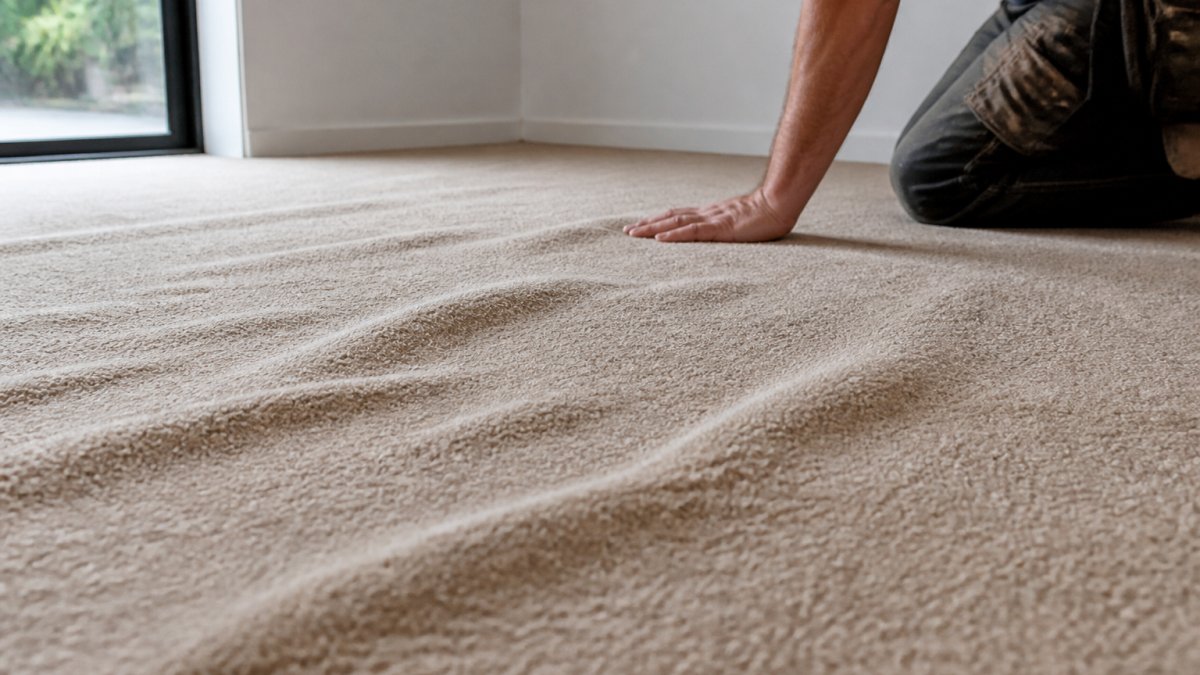
Restretching is due when the carpet no longer sits flat and tight against the floor. The telltale signs are ripples that run in lines across the room, bubbles that appear when you walk, carpet lifting away from the skirting, and loose sections that bunch up near doorways. A stretched carpet also shows premature wear in walkways, because the backing rubs against itself underfoot.
Here's what to check before you call anyone:
- Ripples and waves visible in low light across the room
- Bubbles or buckling that shift when walked on
- Loose edges lifting off the tack strips along walls
- Seam separation where two carpet lengths meet
- Trip hazards in doorways and hallways
Watch out: ripples are a safety issue, not just a cosmetic one. Loose carpet in a hallway or on a stair landing catches feet, and a small ripple can develop into a more serious problem if it is left.
What a Restretching Quote Should Include
A proper restretching quote lists the work, the materials and the exclusions in writing. It should state the measured area, whether furniture will be moved, whether the carpet will be re-trimmed, and what happens if the backing or underlay turns out to be beyond saving. A verbal price over the phone is not a quote.
What should be in the quote
Use this checklist to compare quotes line by line. A complete quote should list each of the following, or state clearly that it is excluded:
- Inspection and measurement, the on-site check of backing condition, tack strips and underlay, and the measured area in square metres.
- Labour, the time on site, including setup and pack-down.
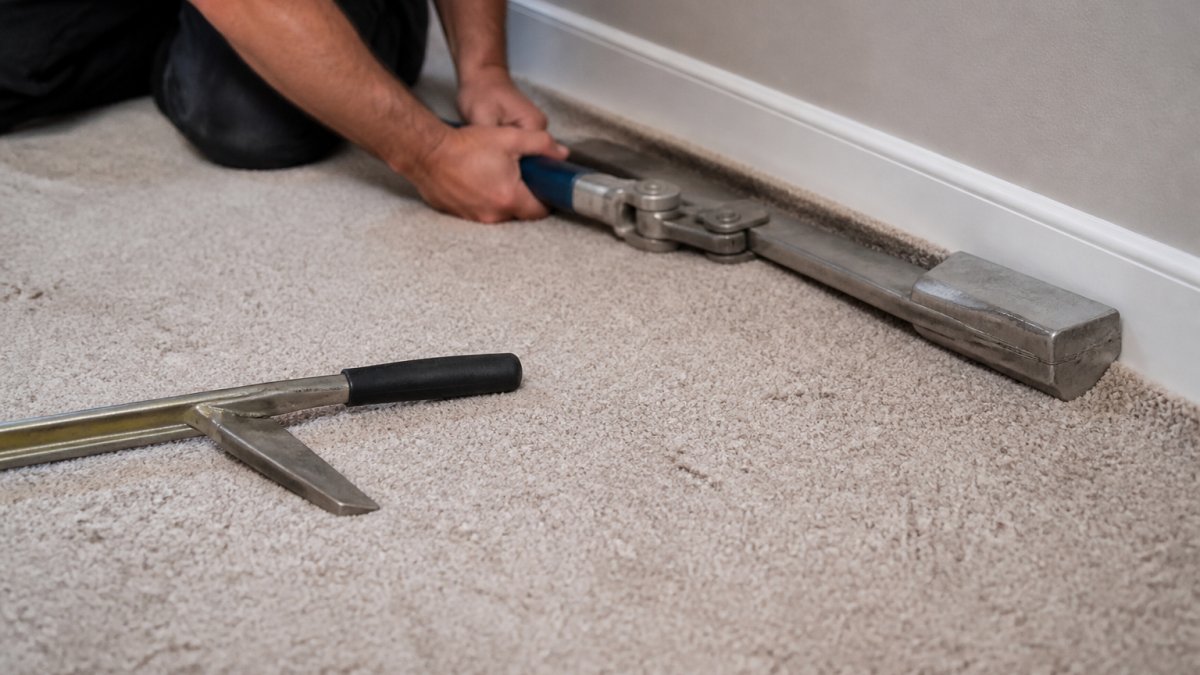
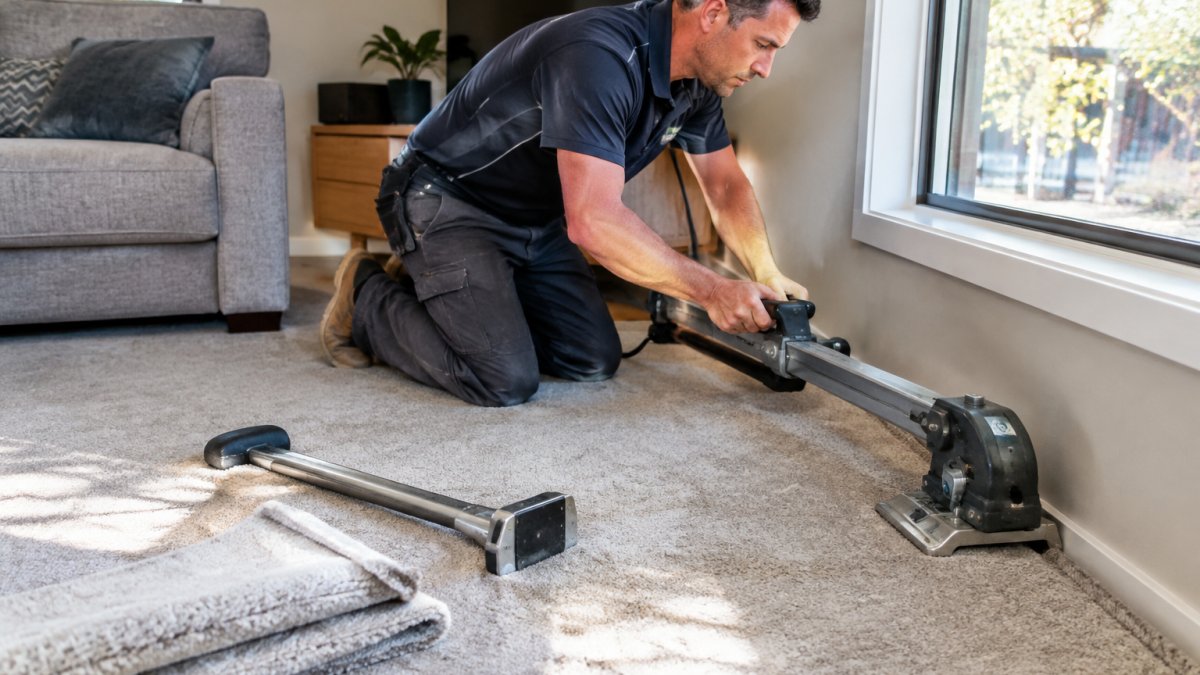
- Power stretching, the method used to re-tension the carpet across the room, not just a knee-kicker nudge at the edges.
- Re-tacking, replacing or re-securing tack strips where the carpet has pulled away from the wall.
- Trimming excess carpet, cutting back the surplus that appears once the carpet is stretched.
- Seam repair or re-seaming, re-joining carpet lengths where seams have split or where trimming exposes a join.
- Furniture moving, whether the provider moves furniture or expects the room cleared before arrival.
- Disposal, removal of offcuts and old tack strips from the site.
- Minimum call-out, whether the minimum service charge is included in the quoted figure or added on top.
Labour, service charges and minimum call-outs
Labour is charged for the time on site, and most providers apply a minimum service charge for small jobs because the setup takes as long as the fix. Ask whether the quote includes the minimum call-out or adds it on top. If the job is one small room, that minimum can be the difference between a fair price and a poor one.
Furniture moving, trimming and seam repair
Furniture moving is often excluded, and it's the most common surprise on the invoice. Trimming excess carpet and repairing seams are separate line items on many quotes. Get each one listed, or you'll be comparing a bare price against a complete one.
Watch out: if a quote does not state whether furniture moving and disposal are included, assume they are not, and ask for a revised quote that lists them before you compare totals.
If you want to see what the service involves before you judge the price, the carpet restretching service page sets out the process from inspection through to re-tensioning.
Carpet Restretching vs Replacement: Which Makes Sense
Restretching makes sense when the carpet itself is sound and only the tension has failed. Replacement makes sense when the backing is degraded, the pile is worn through in walkways, or the carpet is old enough that re-tensioning won't hold. The deciding factor is the condition of the carpet, not its age alone.
A simple way to decide:
| Situation | Better option | Why |
|---|---|---|
| Ripples in one or two rooms, carpet in good condition | Restretch | Fixes the cause at a fraction of replacement |
| Carpet lifting along walls, backing still firm | Restretch plus re-tack | Tension restored, edges secured |
| Worn walkways, flattened pile, old backing | Replace | Restretching won't fix worn fibre |
| Seams split but carpet sound | Repair and restretch | Cheaper than a full re-lay |
| Multiple rooms rippling after a flood or spill | Inspect first | Water damage may have ruined the backing |
For a straight verdict on the money question, is carpet restretching worth it covers the trade-offs. If you're still unsure which way to go, our guide to choosing between repair, restretching and replacement walks through the decision.
How Long Does Carpet Restretching Last?
A correctly restretched carpet can hold its tension for a long time, provided the backing is sound and the carpet was installed properly the first time.
A quick job that leaves the carpet slightly loose may ripple again, so compare what each quote includes.
DIY Carpet Stretching Tools vs Hiring a Professional
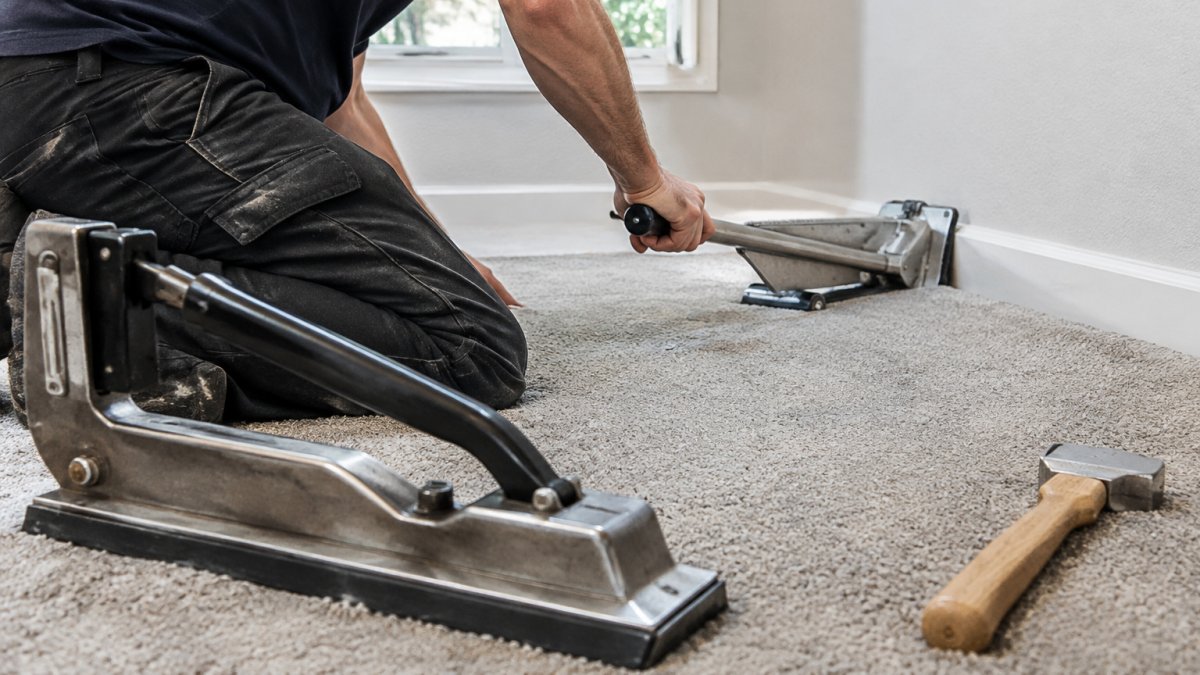
DIY carpet stretching suits one small, accessible ripple and nothing more. A knee kicker can nudge a loose edge back onto the tack strips, but it cannot deliver the tension a full room needs.
The common mistake is over-stretching with a knee kicker and tearing the backing or splitting a seam. Once that happens, the repair costs more than the original job would have.
If you're weighing it up, how to fix carpet ripples without making them worse explains where DIY stops being sensible. For anything beyond a single small ripple, a professional with the right equipment is the cheaper path overall.
When you know what a quote should cover, the next step is getting one in writing. Contact us for a quote and we'll inspect the carpet, measure the area and tell you honestly whether restretching will hold or whether replacement is the better spend.
Loose carpet is a decision, not a chore: fix it while the backing is sound and you keep the carpet you already paid for.
Frequently Asked Questions
How much does it cost to restretch carpet per room?
In practice, carpet restretching cost per room depends on the floor area, how much the carpet has loosened, whether furniture needs moving and whether seams or underlay need attention. Ask for a written quote based on the actual room.
Is it cheaper to restretch carpet or replace it?
Restretching can cost less than full replacement because you keep the existing carpet and underlay. The deciding factor is condition: if the backing is delaminating, the pile is worn through in traffic areas or there is water damage, stretching will not fix it. Look at carpet age, wear patterns and whether ripples return quickly after previous repairs. A licensed installer can assess whether the carpet still has enough tension and backing integrity to stretch.
How do I know if my carpet needs restretching?
Watch for ripples, bubbles, buckling and loose areas that move underfoot, plus wrinkles that appear along traffic paths or near doorways. Trip hazards around room edges and carpet that will not sit flat after vacuuming are other signs your carpet needs restretching. Small ripples tend to spread, so fixing them early usually costs less than waiting until the whole room has loosened.
Can you restretch carpet yourself, or do you need a professional?
DIY carpet stretching tools such as knee kickers and power stretchers are available to hire or buy, but getting even tension across a room is difficult without trade experience. Poorly stretched carpet can ripple again within months, and seams can split under the extra load. A professional uses a power stretcher anchored to the room, resecures tack strips and trims excess carpet properly, which is why results tend to last longer.